Predictive content personalization is transforming how businesses connect with audiences by anticipating user needs and delivering tailored experiences across channels using top website analytics tools. This article explores seven tools that leverage machine learning to boost engagement, conversions, and revenue through smarter personalization strategies.
Key Takeaways:
- Why It Matters: Companies using advanced personalization techniques generate 40% more revenue, while irrelevant content causes over 75% of users to lose interest.
- Top Tools: Platforms like Adobe Target, Dynamic Yield, and Braze excel in predictive analytics and personalized content delivery.
- Results: Businesses like Philips and TechConnect have reported conversion boosts of 30%-40% and shorter sales cycles using these tools.
- Cost: Pricing varies widely, from entry-level options like HubSpot ($890/month) to enterprise solutions like Adobe Target (custom, often $100K+).
Quick Comparison
| Tool | Predictive Features | Personalization Focus | Integration Options | Pricing (Annual) | Best For |
|---|---|---|---|---|---|
| Adobe Target | Real-time behavior analysis | Dynamic content delivery | Adobe ecosystem | Custom (typically $100K+) | Large enterprises |
| Dynamic Yield | AdaptML for user behavior | Multi-channel experiences | APIs, eCommerce platforms | $35K-$100K+ | High-traffic eCommerce brands |
| Braze | Churn and purchase predictions | Multi-channel messaging | CRM, analytics integration | $60K-$200K+ | Mobile-first brands |
| HubSpot | Breeze AI for lead scoring | CRM-integrated campaigns | HubSpot CRM, third-party tools | $9.6K+ (Pro tier) | SMBs and CRM-heavy teams |
| Klevu | AI-powered search recommendations | eCommerce site search | eCommerce platforms | Custom | Smaller eCommerce businesses |
| Domo | AutoML for content performance | Data-driven insights | Cloud data warehouses | Custom | Data-heavy organizations |
| Optimizely | Contextual bandits for testing | Experimentation-focused | Analytics, CMS, marketing tools | $36K-$200K+ | Experimentation-driven teams |
This guide breaks down the features, pricing, and use cases of each tool, helping you choose the right fit for your business needs.
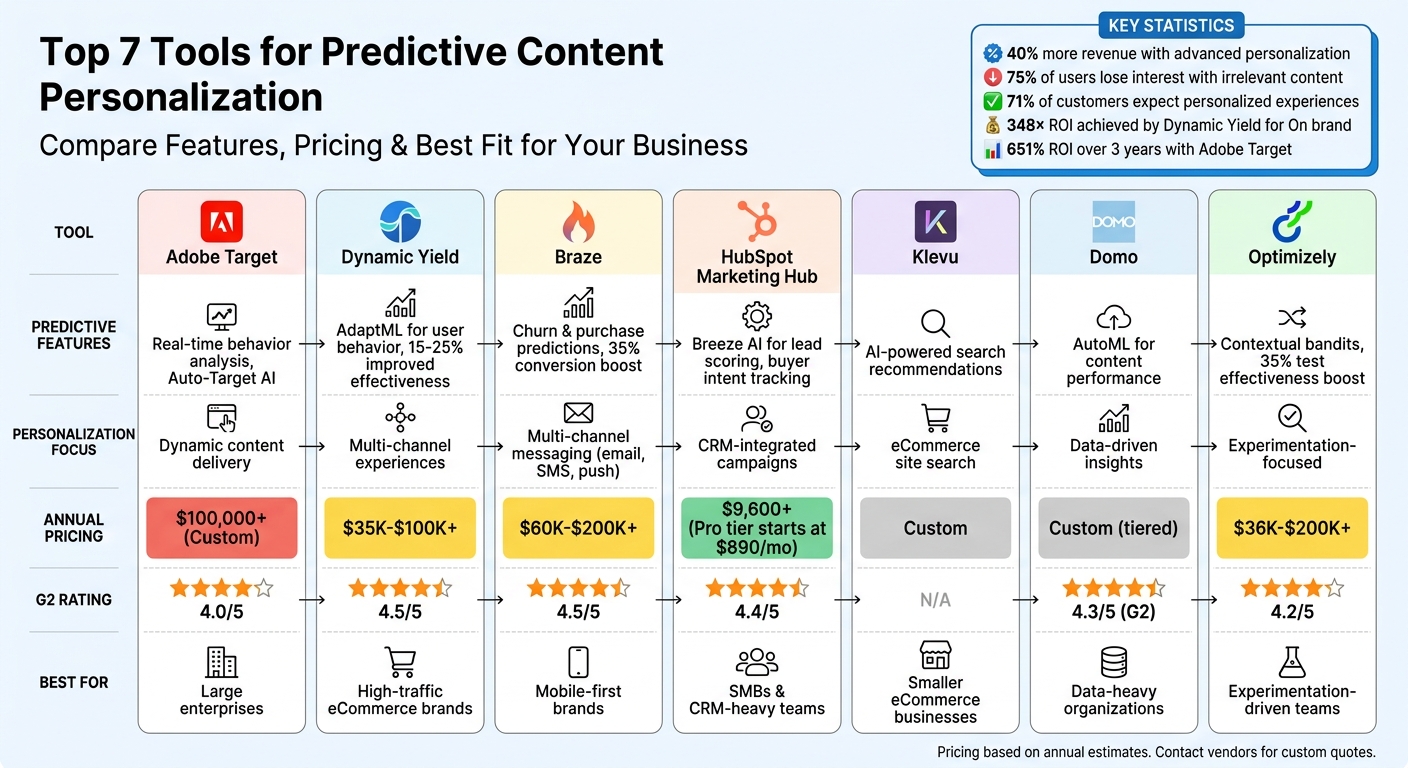
Comparison of 7 Top Predictive Content Personalization Tools: Features, Pricing, and Best Use Cases
Create One-to-One Personalized Experiences at Scale with Marketo Engage | Adobe for Business
sbb-itb-5174ba0
1. Adobe Target
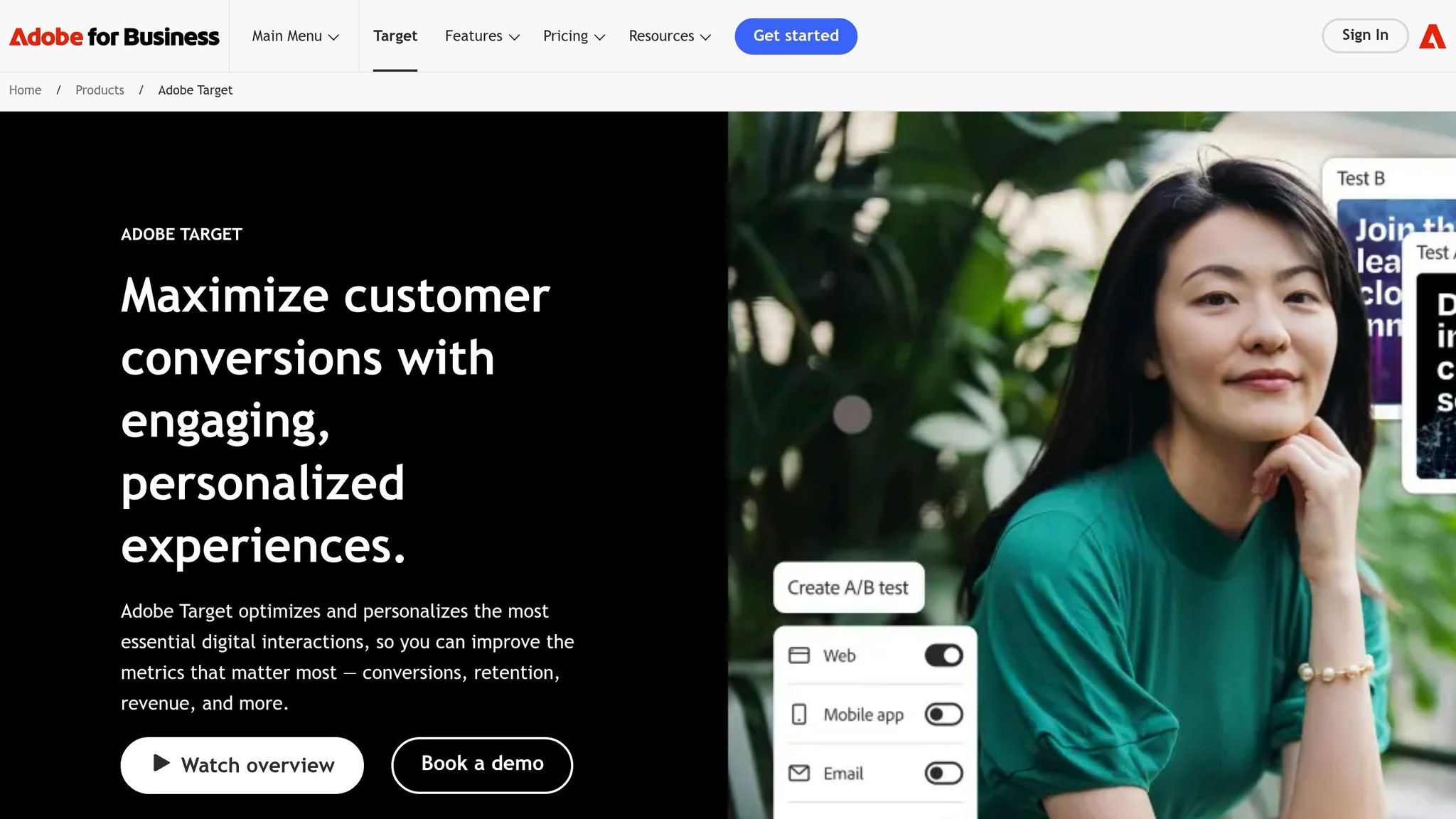
Adobe Target stands out as a leader in predictive content personalization, showcasing how customized experiences can significantly boost conversions. This enterprise-level analytics and personalization tools uses machine learning to adapt dynamically to visitor behavior. Its Auto-target feature evaluates each visitor and selects the most relevant experience from multiple marketer-defined options based on their profile, past actions, and patterns from similar users [8][12]. By removing the need for manual adjustments, the algorithm continuously learns and refines its approach.
Predictive analytics capabilities
Adobe Target’s Optimized Recommendations engine uses browsing and purchase history to suggest products and content users might not have discovered on their own [8][14]. The Journey Optimizer Experimentation Accelerator analyzes results from past tests to suggest areas for improvement [9][13]. Its decisioning engine processes real-time interactions, ensuring relevant content is delivered across websites, mobile apps, and social media platforms [9][11]. An IDC report highlights its impact: a 651% ROI over three years, a 38% increase in conversions, over 182,000 additional clicks annually, and a reduction of 150,000 bounces each year [9][10][11][13].
Content personalization features
Adobe Target’s Next-hit personalization and Offer Pairing features enable real-time activation of audience segments while testing tailored offer combinations to boost engagement [8][12][14]. For example, one implementation created 76 new audience segments and achieved a 125% increase in engagement [9][10]. AI-powered recommendations have driven a 70% higher conversion rate for suggested products and a 55% lift in conversions during return visits [16][17]. These features ensure seamless personalization across digital channels.
Integration options
Adobe Target works seamlessly with the Adobe Experience Platform and Adobe Real-Time CDP, enabling businesses to capture and activate customer data across multiple channels [8][9][10]. This integration streamlines workflows, allowing teams to transition from insights to action in minutes by leveraging real-time customer profiles and advanced algorithms [9][15]. The platform ensures consistent, personalized content delivery across web, mobile, email, and even IoT devices [16][17].
Pricing structure
Adobe Target offers customized pricing tailored to the specific needs of your organization [16][17]. Pricing depends on factors such as the product tier (enterprise-grade or simplified setup), the number of digital properties where it will be deployed, and the scale of omnichannel delivery [16][17]. For detailed pricing, it's best to contact Adobe Sales [9][10][15].
2. Dynamic Yield
Dynamic Yield, a platform recognized by Gartner from 2019 to 2026, specializes in AI-powered content personalization [18][19]. Its Experience OS delivers customized experiences across web, mobile, email, kiosks, and ads [18][19]. At the heart of its technology is AdaptML, a machine learning engine that refines digital experiences in real-time based on user behavior [6][23]. Let’s dive into how its predictive capabilities and personalization tools deliver measurable results.
Predictive Analytics Capabilities
Dynamic Yield’s predictive tools - Predictive Targeting, Propensity Models, and Affinity Profiling - use machine learning to turn A/B testing tools data into actionable insights. These tools align content with users’ immediate needs by analyzing behavioral patterns and purchase histories [18]. For example, its algorithms can anticipate future purchases, helping businesses optimize their recommendations [20]. This approach has delivered impressive outcomes, such as an 89% increase in purchases through behavior-driven personalization and a 27.6% boost in conversion rates via multi-touch campaigns [18].
Content Personalization Features
Dynamic Yield empowers marketers to tailor page layouts, menus, and product categories to individual users - all without needing developer support [18]. A standout feature is its Open-Time Decisioning for emails, which updates recommendations the moment an email is opened, ensuring content remains relevant [20].
Brands have seen notable success with these tools. For instance, On, a sportswear company, used Dynamic Yield’s server-side APIs and machine-learning recommendations across 11 regions, achieving a 348x ROI and driving 16% of total online revenue through personalized product pages [22]. Similarly, e.l.f. Cosmetics enhanced their mobile menu based on past shopping behaviors, resulting in a 17.6% increase in mobile menu clicks and a 4.2% rise in average revenue per user [18][22].
Integration Options
Dynamic Yield’s flexible architecture makes integration seamless, allowing businesses to connect the platform with data management systems, eCommerce platforms, email tools, and analytics solutions [18][19]. It supports both server-side and client-side deployment and offers tools like APIs, SDKs, and a visual WYSIWYG editor, enabling marketers to create campaigns without technical expertise [18][24].
The platform integrates with major tools like Shopify, Salesforce, HubSpot, Adobe Analytics, and over 100 other martech solutions [18][19][23]. One notable success story is Tottenham Hotspur, which revamped its mobile website using Dynamic Yield’s integration capabilities, leading to a 40% increase in mobile conversion rates [24].
Pricing Structure
Dynamic Yield operates on a custom quote-based pricing model tailored to a business’s size and traffic volume [21]. Pricing typically starts at $35,000 to $50,000 per year, with costs for high-traffic businesses reaching six figures [3][23]. While no free trial or standard pricing is available, the platform offers a 10-day accelerated onboarding plan to help businesses see results quickly [19].
3. Klevu
Klevu takes a website-first approach to personalization, offering a solution tailored specifically for ecommerce. This AI-powered platform focuses on improving conversion rates and delivering personalized experiences through smarter search results and product recommendations that align with each shopper's behavior [6].
Predictive Analytics Capabilities
Klevu uses machine learning to analyze a variety of behavioral signals using top analytics tools, such as browsing history, search activity, and engagement patterns [25][26]. By processing this data, it identifies trends and predicts what visitors are likely looking for. This allows the platform to recommend products and content that encourage higher engagement and conversions [25][26].
Content Personalization Features
The platform offers features like intelligent site search, personalized product recommendations, and automated category merchandising [6]. Its intelligent search capabilities are further enhanced by a ChatGPT-powered AI chatbot (MOI), which helps shoppers find what they need quickly. Combined with optimized category merchandising, Klevu simplifies product discovery and supports increased sales [6].
Integration Options
Klevu is designed to enhance the on-site shopping experience and integrates seamlessly with ecommerce platforms. Unlike broader solutions, it focuses exclusively on website optimization without involving cross-channel messaging [6].
4. Braze
Braze goes beyond website-specific personalization by offering a platform that connects with users across multiple channels. This enterprise-level customer engagement tool delivers tailored experiences through email, SMS, push notifications, in-app messages, and WhatsApp. It’s built for brands that need real-time, one-to-one personalization at scale across all user touchpoints.
Predictive Analytics Capabilities
The BrazeAI Predictive Suite takes customer engagement to the next level by forecasting churn, predicting future actions, and identifying the best times and channels (like SMS, email, or push notifications) to engage users. These insights have led to a 35% boost in conversion rates. Another standout feature is Braze's AI Item Recommendations, which uses past behavior to suggest the next best product or content. For instance, a retail company using this feature saw a 35% jump in purchase conversion rates [28].
Content Personalization Features
Braze uses Liquid personalization combined with Connected Content to pull real-time data from external APIs. This can include things like live pricing, local weather updates, or loyalty balances. Brands that have implemented Liquid personalization tags have reported a 48% increase in mobile push open rates and a 55% rise in email click-through rates [27].
The BrazeAI Liquid Assistant simplifies personalization even further by generating Liquid code from text prompts. Jovana Kovac, Digital Marketing Specialist at Welcome Pickups, shared her experience:
"One of my favorite Braze features is the BrazeAI™ Liquid Assistant. It has streamlined liquid coding, enabling instant message personalization."
For marketers looking to design personalized, multi-channel campaigns, Braze Canvas offers a no-code, drag-and-drop interface that makes journey orchestration straightforward [27].
Integration Options
Braze seamlessly integrates with CRMs, CDPs, and data warehouses, processing customer actions in real time. The Braze MCP Server allows for conversational data queries, making it easier to access customer engagement data.
For example, Quizlet used Braze Connected Content to incorporate real-time data into an email campaign, driving nearly 17 million additional learning sessions and over two million new monthly active users [27]. Grubhub also utilized Braze Content Blocks to create their "Taste of 2020" campaign, pulling 32 custom attributes. This effort led to a 100% increase in social media buzz and an 18% surge in word-of-mouth mentions [27]. These integrations strengthen Braze’s ability to deliver impactful cross-channel engagement.
Pricing Structure
Braze offers custom enterprise pricing, which requires direct consultation to determine the best fit for your needs.
5. HubSpot Marketing Hub with Breeze AI
HubSpot Marketing Hub pairs a robust marketing platform with Breeze AI, an advanced system seamlessly built into HubSpot's Smart CRM. Breeze AI gathers context from customer interactions without requiring manual setup, making it easier to manage and personalize customer relationships [41,46]. By leveraging predictive insights, HubSpot ensures that every interaction feels relevant and timely. This combination of AI and CRM creates a standout approach to predictive personalization.
Predictive Analytics Capabilities
Breeze AI taps into historical data and user behavior - like email engagement and website activity - to predict which leads are most likely to convert [44,45]. Its Buyer Intent Tracking scans over 200 million profiles to identify top prospects [44,45]. Plus, it determines the best times to send marketing and sales emails based on past engagement, helping increase open rates [31]. Another feature, the Customer Health Agent (currently in Beta), evaluates account health using CRM data. This tool prioritizes at-risk customers and suggests actionable next steps [41,42]. HubSpot reports that users of their unified platform see impressive results: 107% more leads, 35% more deals closed, and ROI achieved by 8 out of 10 customers within three months [32]. Breeze AI ensures these analytics translate into impactful, personalized outreach.
Content Personalization Features
Breeze AI excels at tailoring content to specific audience segments. The Prospecting Agent monitors accounts for buying signals and sends customized outreach to individual leads [33]. The AI Email Writer simplifies creating marketing and sales emails by letting users specify product details, recipient information, and tone [48,50]. Companies like Agicap and Sandler have seen real results - Agicap saved 750 hours weekly and boosted deal velocity by 20%, while Sandler reported 25% higher engagement and four times more sales leads thanks to Breeze-powered personalization [33].
As Bradley Poole, Chief Revenue Officer at ResellerRatings, shared:
"The impact of Breeze prospecting agent has been remarkable... It's crafting emails that outperform some of our US-based BDRs in quality and engagement." [30]
Other tools like Content Remix repurpose high-performing assets for different platforms, ensuring relevance across channels [33]. Additionally, Brand Voice Intelligence allows users to train the AI on brand guidelines, ensuring a consistent tone and style across all communications [50,51].
Integration Options
The Breeze Marketplace offers over 20 AI agents designed for marketing, sales, and service workflows. For customization, the Breeze Studio provides a low-code environment where users can adapt pre-built agents or create new ones tailored to their processes and documents. Breeze integrates directly with Gmail via the HubSpot Sales Chrome extension and supports auto-publishing for social media with the Social Post Agent. Users can access Breeze Assistant through the HubSpot desktop platform, a browser extension, or a mobile app. Meanwhile, the Breeze Customer Agent resolves over 65% of customer interactions automatically [35].
Candace Bazemore, Director of Digital Strategy and Transformation at Morehouse College, highlighted the benefits:
"With Breeze studio, we're exploring agents and assistants that understand our content and processes, so our teams can focus on what matters most - our students." [30]
Pricing Structure
HubSpot includes Breeze Assistant and some AI features for free in all accounts [29]. Advanced Breeze capabilities are available in the Professional and Enterprise editions. The Professional plan starts at $890/month with 5,000 Credits, while the Enterprise plan is priced at $3,600/month [34]. Specific agents, such as the Customer Agent and Prospecting Agent, require HubSpot Credits. Breeze Intelligence operates on a credit-based system, ranging from 100 credits for $30/month to 10,000 credits for $700/month. For larger needs, a one-time bulk enrichment option is available for $5,000 [36].
6. Domo
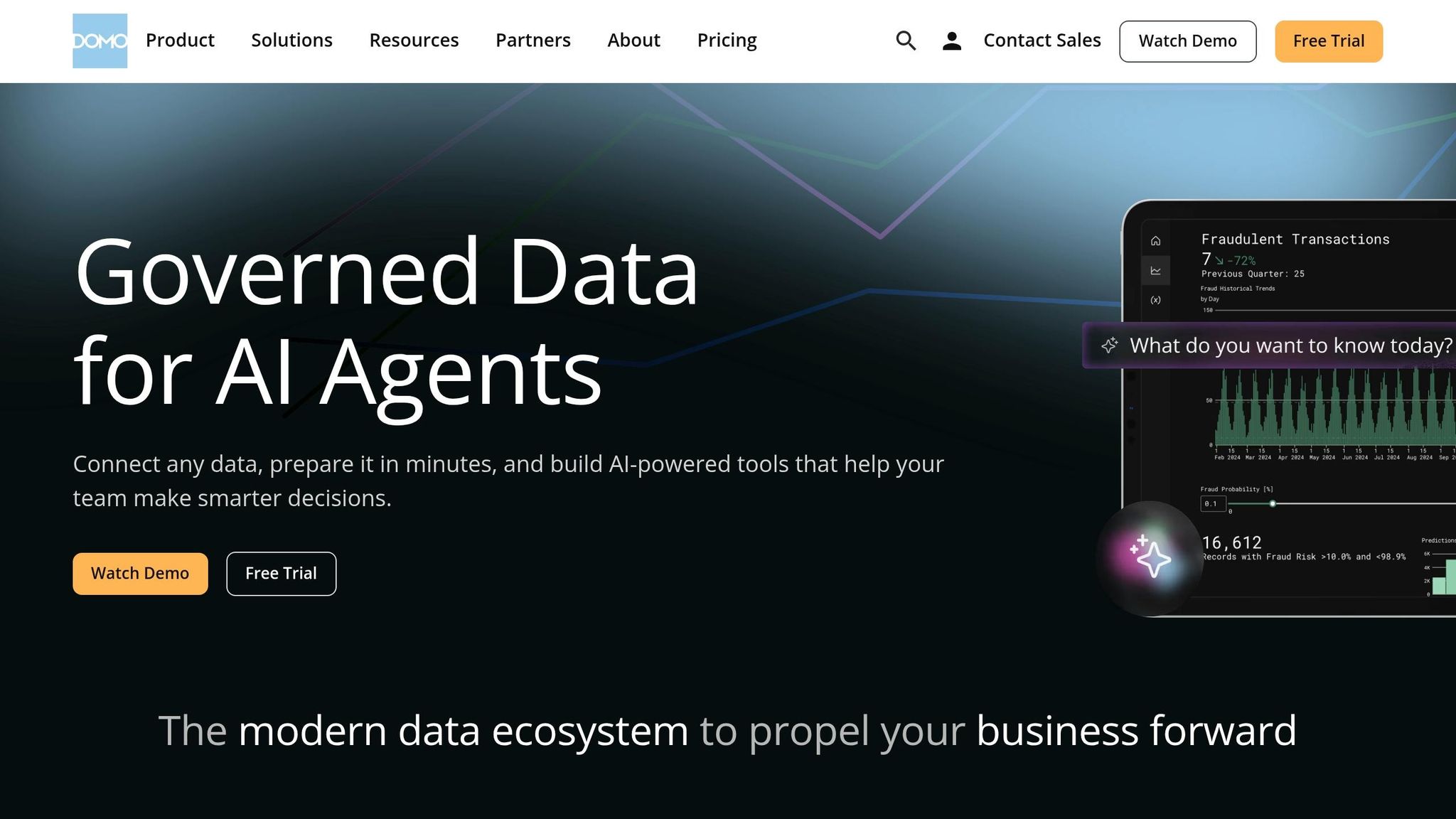
Domo brings together business intelligence and predictive analytics in one platform, making it easier to forecast content performance. Its Domo.AI feature uses AutoML to automate algorithm selection and feature engineering. This means you don’t need to be a data scientist to create predictive models [37]. With over 1,000 native connectors, Domo integrates smoothly with tools like CRMs, marketing automation platforms, and web analytics systems [37][39]. These integrations lay the groundwork for powerful predictive insights.
Predictive Analytics Capabilities
Domo offers specialized AI tools tailored for content marketers. For example:
- The Audience Engagement Predictor estimates future click-through rates, bounce rates, and retention metrics by analyzing historical data [38].
- The Creative Format Optimizer determines which content formats - like videos, carousels, or static images - will resonate most with specific audience segments [38].
- The Customer Lifetime Value (CLV) & Retention Predictor flags potential churn risks and suggests actions to improve retention [38].
In finance, teams using comparable predictive models have reduced forecast variance by 20% to 30% compared to traditional spreadsheet-based methods [37].
Tom Heritage, Director of Business Intelligence at Lenovo, highlighted Domo's impact:
"One of the main reasons we use Domo as our data platform is the ease of demonstrating value at all levels across the global organization, from frontline workers to senior executives." [39]
Content Personalization Features
Domo isn’t just about analytics - it also supports personalized content delivery. The Agent Catalyst feature connects AI agents to governed datasets using retrieval-augmented generation (RAG). This ensures recommendations are based on up-to-date, real-world data [37]. Additionally, its human-in-the-loop functionality lets marketers review and tweak AI predictions before they are applied [37].
To avoid confusion across teams, Domo’s semantic layer standardizes metric definitions, ensuring everyone works with the same understanding of KPIs [37]. Marketers can deploy insights directly into workflows or websites using real-time APIs or embedded AI Chat [37].
David Damitz, Director of Business Intelligence at TaylorMade, shared his experience:
"By having all our curated data in one place, Domo provides a single version of the truth that is readily available to whoever needs it." [39]
Integration Options
Domo’s hybrid cloud setup integrates seamlessly with cloud data warehouses like Snowflake, BigQuery, and Databricks. This allows analytics to run directly on existing data without the need for major migrations [37]. The platform supports both batch scoring for periodic updates and real-time APIs for instant predictions [37]. With SQL-based Magic ETL and role-based access controls, technical teams can ensure data governance while enabling marketers to access actionable insights [37].
Pricing Structure
Domo operates on a tiered subscription model, with pricing based on features and the number of users [37]. A free trial is available for those who want to explore its capabilities [39]. For larger enterprises, custom pricing can be arranged by contacting their sales team [37].
The platform has received strong user feedback, earning a 4.5/5 rating on Gartner Peer Insights (based on 489 reviews as of January 2026) and 4.3/5 on G2 (from 974 reviews) [39]. Users often praise its unified data view, though some mention a learning curve for beginners [37][39]. Domo’s integrated approach to data and predictive analytics positions it as a valuable tool for marketers looking to personalize content in today’s competitive environment.
7. Optimizely
Optimizely blends experimentation with predictive analytics, helping marketers fine-tune content for better personalization. Its Optimizely Opal AI assistant offers real-time advice on which content variations are most likely to convert and generate revenue [41][44]. Instead of waiting weeks for A/B test results, the platform uses multi-armed bandits (MABs) to redirect traffic toward the best-performing variations instantly [40]. For even more tailored experiences, contextual bandits assess each visitor's live behavior to deliver personalized, one-on-one interactions [40].
Predictive Analytics Capabilities
Optimizely's natural language processing (NLP) engine dives deep into content, creating real-time interest profiles for every visitor - whether they're a returning customer or an anonymous site user [43]. It goes beyond basic keyword matching to understand the intent behind user actions. Additionally, its AI-driven content audits highlight topics that lead to high-value outcomes and increased revenue [41]. Optimizely claims these tools can boost test effectiveness by 35%, and some users have reported a 37% jump in website engagement after implementation [42].
Darren Chait, Head of Growth Marketing at Calendly, shared his experience:
"Every personalization campaign we run through Optimizely has resulted in significant improvements in conversion rate." [40]
Content Personalization Features
Optimizely takes its predictive capabilities further by dynamically updating audience segments as visitors interact with your site. This ensures that content remains relevant for both new and repeat users [40]. Marketers can trigger personalized experiences based on specific actions, like clicking a button or submitting a form. The platform's visual editor simplifies the creation of targeted elements - such as banners and countdown timers - with pre-designed templates, all without needing developer input [40]. Optimizely’s edge-delivery engine ensures personalized content loads instantly, avoiding flickers and maintaining strong Core Web Vitals performance [40]. It also automates product and content recommendations across web and email channels [41].
Integration Options
Optimizely integrates with popular tools like Google Ads, Google Analytics, Amplitude, HotJar, and Quantum Metric [40]. It works seamlessly with the Optimizely Data Platform (ODP) to centralize customer data and supports third-party content management systems [40][44]. The platform also connects to social media analytics tools and sales enablement platforms, making it a versatile addition to any marketing stack [44]. Recognized as a Leader in the Gartner® Magic Quadrant™ for Content Marketing Platforms for eight years running as of 2025, Optimizely has proven its staying power [44].
Pricing Structure
Optimizely provides custom pricing based on your budget and technical requirements [42]. To get a quote or demo, you’ll need to contact their sales team directly [45]. The platform has earned a 4.2/5 rating on G2 (from over 830 reviews) and 8.6/10 on TrustRadius [45]. Users frequently praise its ability to reduce go-to-market time and improve data accuracy through automated workflows [44].
Tool Comparison Table
Choosing the right predictive personalization tool depends on your company’s size, technical resources, and specific needs. Below is a table summarizing key features, integrations, pricing, and ratings to help you make a quick, informed decision.
| Tool | Predictive Analytics | Content Personalization | Integration Options | Pricing (Annual Est.) | G2 Rating | Best For |
|---|---|---|---|---|---|---|
| Adobe Target | Auto-Target (Sensei AI) for automated experience selection and next-hit personalization | Automated traffic allocation | Works with Adobe Analytics and Experience Manager | Custom (typically $100,000+)[1] | 4.0/5 [3] | Large enterprises using Adobe products |
| Dynamic Yield | AdaptML algorithm builds individual affinity profiles with 15–25% improved effectiveness [23] | Real-time personalization across web, app, email, and kiosks | Server-side APIs and ecommerce platform integrations | $35,000–$100,000+ [23] | 4.5/5 [3] | High-traffic ecommerce brands |
| Braze | Predictive Suite calculates churn and purchase probability per user | Mobile-first messaging with real-time journey orchestration | Event-driven architecture; integrates with CRM and analytics | $60,000–$200,000+ [23] | 4.5/5 [23] | Mobile-first apps and fintech brands |
| HubSpot Marketing Hub | Breeze AI automates audience targeting and content generation | Smart content, personalized CTAs, adaptive email campaigns | Native HubSpot CRM and select third-party tools | Starting at $9,600+ ($800/mo Professional tier) [3] | 4.4/5 [3] | SMBs and CRM-centric marketing teams |
| Optimizely | Stats Accelerator shifts traffic toward winning variants using machine learning | Experimentation-driven personalization with dynamic audience segmentation | Integrates with analytics and marketing platforms | $36,000–$200,000+ [23] | 4.3/5 [3] | Experimentation-first marketing teams |
This table offers a side-by-side look at the core features of each tool, but for a deeper dive, refer to the detailed breakdowns earlier in the article.
Key Insights and Trends
- Pricing Considerations: Tools like HubSpot and Optimizely offer more affordable entry points, making them ideal for websites with fewer than 500,000 monthly sessions. On the other hand, platforms like Adobe Target and Braze often come with higher setup costs and longer implementation timelines.
- Real-World Results: Dynamic Yield delivered a 348× ROI and drove 16% of total online revenue for On [22]. HubSpot's Breeze AI helped achieve a 143% boost in web traffic and a 99% increase in inbound leads within a year [22].
- Revenue Potential: Companies excelling at personalization generate 40% more revenue from these efforts [23].
- Market Growth: The personalization engine market grew by 26.1% in 2024, reaching $1.2 billion, and is expected to climb to $31.6 billion by 2030 [23].
Pro Tips for Success
- Start Small: For smaller businesses, cost-effective options like HubSpot or Optimizely’s basic plans can be a great entry point. Avoid jumping into high-cost solutions prematurely.
- Audit Your Data: Poor data quality can cost businesses an average of $12.9 million annually, so ensure your data is clean and actionable before implementing a new tool [23].
- Pilot Programs: Run a 30-day pilot to assess how well the platform integrates with your workflow and whether it delivers measurable results [23].
Conclusion
Predictive personalization tools can make a big difference, delivering 15–20% higher ROI and boosting revenue by 40% for fast-growing companies - when matched to your organization's size and maturity level [46][7]. With 71% of customers expecting personalized experiences and 76% frustrated when they don’t get them, the pressure to get personalization right has never been higher [5].
But don’t overspend. A well-utilized $500/month tool can easily outperform a $3,000/month platform that sits underused [1]. For websites with fewer than 10,000 monthly visitors, starting small with rule-based segmentation tools like HubSpot is often the smarter choice before diving into advanced AI-driven solutions [1].
The key takeaway? Match the tool to your needs. B2B companies often thrive with firmographic targeting, e-commerce businesses benefit from in-depth product discovery features, and mobile-first brands gain the most from real-time, multi-channel engagement [1][2][4]. The comparisons above show how the right tools can boost both efficiency and revenue.
Also, think about your existing tech stack. If your organization already uses platforms like Adobe or Salesforce, native tools like Adobe Target or Salesforce Einstein often integrate more smoothly than standalone options [1][2]. Before committing, conduct an audit of your current integrations to ensure you can maintain a unified customer view [3]. Proper integration is the foundation for achieving long-term, data-driven success.
Data-driven marketing isn’t just a buzzword - companies that embrace it are 6× more likely to see year-over-year profitability, making the right tool choice a game-changer [46].
FAQs
What data do I need before using predictive personalization?
To make predictive personalization work well, you need to focus on gathering three main types of data:
- Behavioral data: This includes information like page views, click-through rates, and conversion rates - essentially, how users interact with your content or platform.
- Demographic data: Details such as age, gender, and income help you understand the personal characteristics of your audience.
- Firmographic data: This is more business-focused, covering aspects like company size and industry.
Since predictive analytics depends on historical data to make accurate forecasts, ensuring the data you collect is both reliable and high-quality is key. This allows you to deliver content that's not only relevant but also perfectly timed for your audience.
How do I choose the right tool for my business size?
To find the right predictive content personalization tool for your business, keep these key factors in mind:
- Business size and needs: If you're running a smaller business, look for tools that are cost-effective and simple to implement. Larger companies might need more advanced platforms that offer customization to meet complex requirements.
- Integration and deployment: Select a tool that aligns with your team's technical expertise and can be deployed within your desired timeframe without unnecessary hurdles.
- Pricing and scalability: Make sure the solution fits your current budget but also has the flexibility to grow alongside your business's future needs.
How can I measure ROI from predictive personalization?
Measuring ROI from predictive personalization means keeping an eye on metrics that directly reflect its impact. Focus on key indicators like revenue lift, customer lifetime value (CLV), conversion rate improvements, and customer retention. These metrics provide a clear picture of how personalization efforts are influencing your business.
To dig deeper, use attribution models to trace how personalized strategies contribute to specific outcomes. This kind of analysis not only helps you quantify success but also highlights areas where you can fine-tune your approach for even better results.