If I were shortlisting customer journey orchestration tools in 2026, I’d start with data location, then channels, then team lift. That cuts this list of 12 tools into 4 groups fast: suite-native tools, CDP-led tools, warehouse-first tools, and mobile-first engagement tools.
Here’s the short take:
- Adobe Journey Optimizer - best if you already run on Adobe Experience Platform
- Salesforce Marketing Cloud Journey Builder - best if Salesforce CRM is your main customer system
- Microsoft Dynamics 365 Customer Insights - Journeys - best for Microsoft-first teams
- Braze - best for product-led, event-based engagement
- Iterable - best for teams with clean warehouse or CDP data
- Insider - best for high-volume cross-channel decisioning
- MoEngage - best for mid-market mobile and lifecycle teams
- CleverTap - best for app-first retention and analytics-led messaging
- Bloomreach Engagement - best for commerce and retail use cases
- Twilio Segment Journeys with Engage - best for warehouse-centric and engineering-led stacks
- MessageBird - best for message routing and channel execution
- Oracle Unity - best for large companies that need deep profile unification
I’d judge them on 8 points:
- event ingestion
- trigger logic
- identity resolution
- journey mapping tools
- real-time actions
- reporting
- warehouse support
- fit for mid-market teams
The split is simple:
- If your stack is already inside Adobe, Salesforce, or Microsoft, staying in that ecosystem often lowers setup friction.
- If your stack runs on Snowflake, BigQuery, app events, or a CDP, tools like Braze, Iterable, Bloomreach, Segment, MoEngage, and CleverTap tend to fit better.
- If your team is lean, mid-market usability matters as much as feature depth.
- If identity is messy, tools with stronger profile stitching matter more than channel count alone.
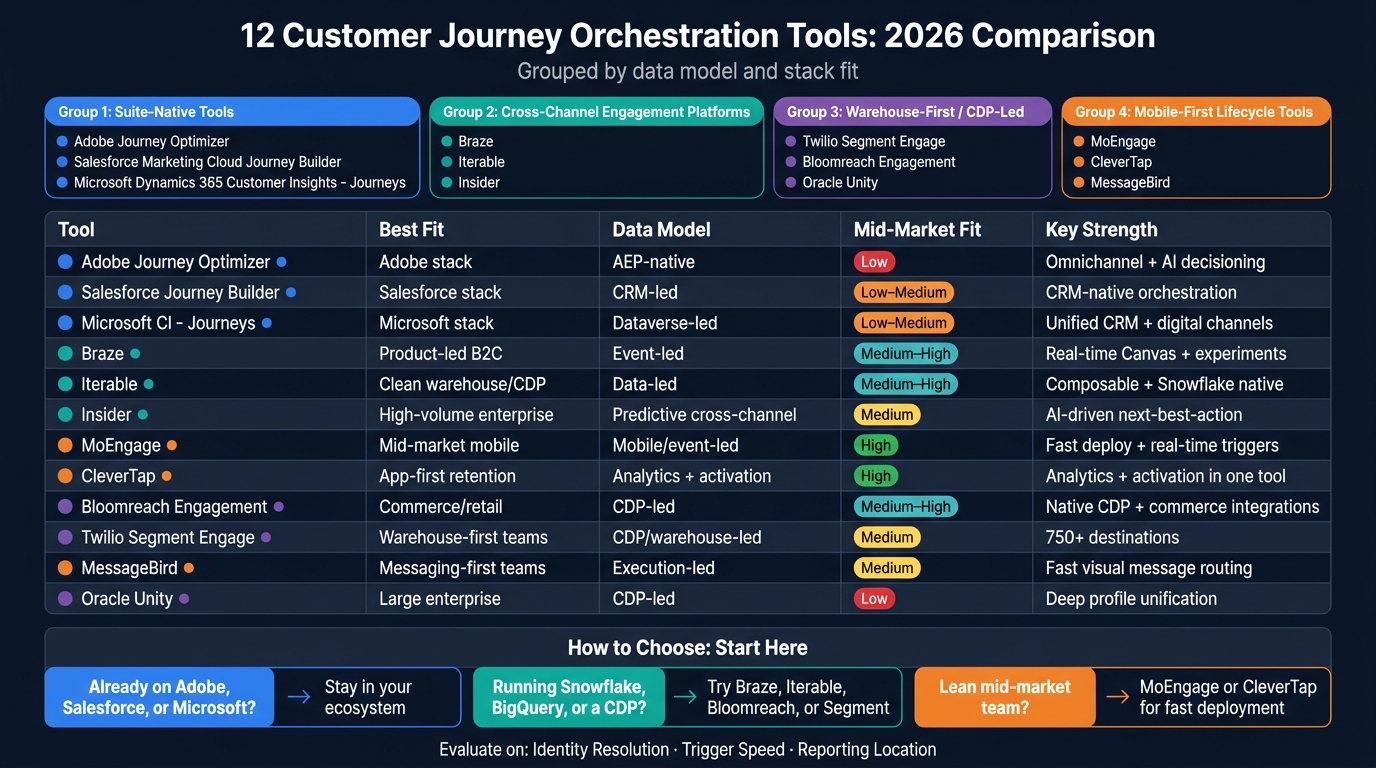
12 Customer Journey Orchestration Tools Compared (2026)
Design Customer Journeys in Journey Optimizer | Adobe for Business
sbb-itb-5174ba0
Quick Comparison
| Tool | Best fit | Data model | Channel strength | Mid-market fit |
|---|---|---|---|---|
| Adobe Journey Optimizer | Adobe stack | AEP-native | Omnichannel | Low |
| Salesforce Journey Builder | Salesforce stack | CRM-led | Email, SMS, push | Low-Medium |
| Microsoft CI - Journeys | Microsoft stack | Dataverse-led | CRM + digital channels | Low-Medium |
| Braze | Product-led B2C | Event-led | Push, in-app, SMS, email | Medium-High |
| Iterable | Clean warehouse/CDP setup | Data-led | Omnichannel | Medium-High |
| Insider | High-volume enterprise teams | Predictive cross-channel | Email, SMS, WhatsApp, push | Medium |
| MoEngage | Mid-market mobile teams | Mobile/event-led | Push, in-app, email, SMS | High |
| CleverTap | App-first retention | Analytics + activation | Push, in-app, email, SMS | High |
| Bloomreach Engagement | Commerce teams | CDP-led | Commerce-focused omnichannel | Medium-High |
| Twilio Segment Engage | Warehouse-first teams | CDP/warehouse-led | Destination-based | Medium |
| MessageBird | Messaging-first teams | Execution-led | SMS, WhatsApp, voice, email | Medium |
| Oracle Unity | Large enterprise data teams | CDP-led | Multichannel | Low |
My main takeaway: don’t buy on journey canvas demos alone. Check identity, trigger speed, and where reporting lives. Those 3 points usually decide whether the tool works in daily use.
If you want a fast shortlist, I’d look at:
- Braze or Iterable for event-based lifecycle work
- MoEngage or CleverTap for mobile-first mid-market teams
- Bloomreach for commerce
- Segment for warehouse-first setups
- Adobe, Salesforce, or Microsoft only if your company is already deep in that stack
That’s the frame I’d use before getting into vendor calls. You can also explore top analytics tools for business to ensure your data quality KPIs align with these journey goals.
1. Adobe Journey Optimizer
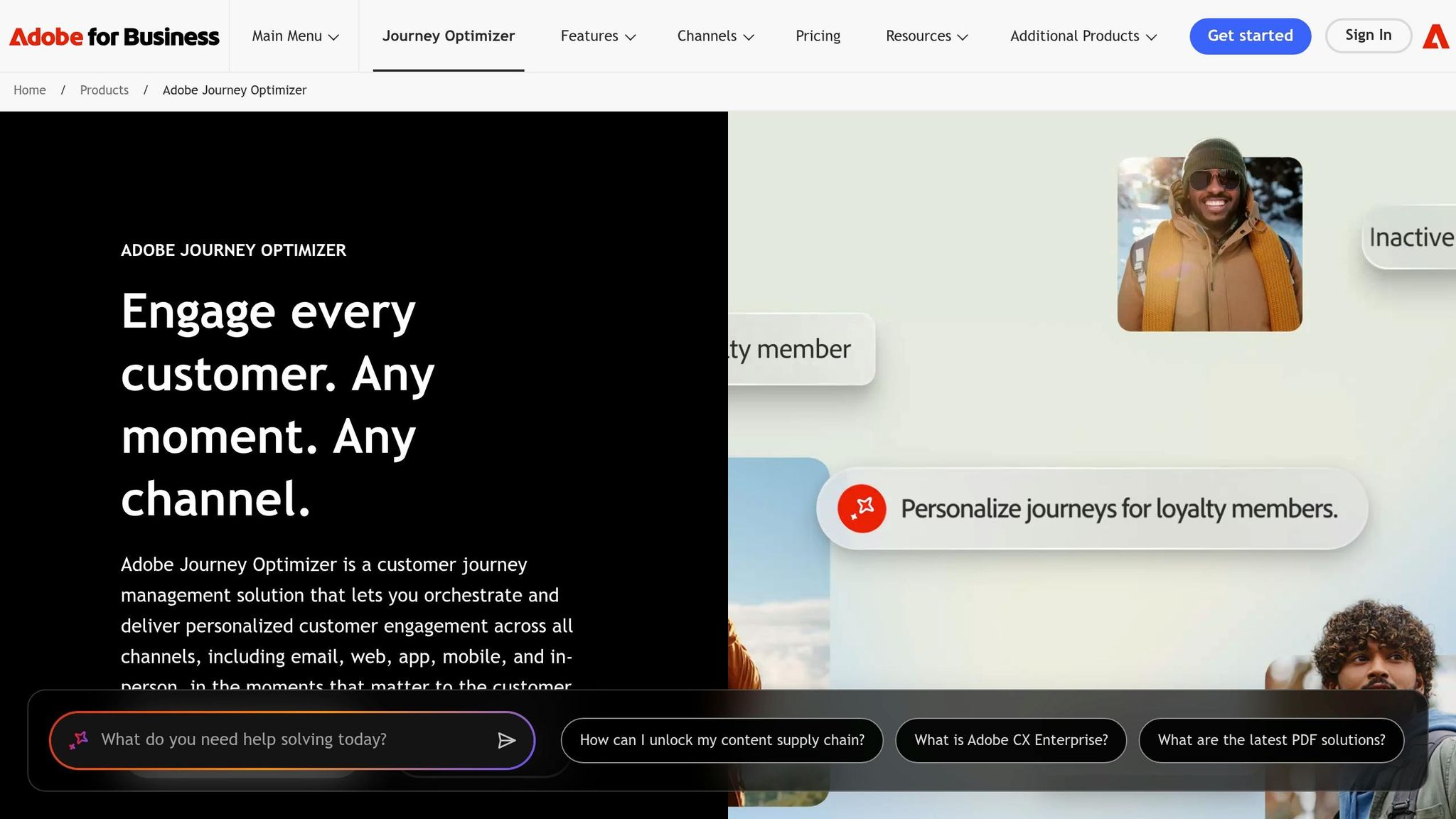
Adobe Journey Optimizer (AJO) fits best when you're already in the Adobe stack. It runs natively on Adobe Experience Platform (AEP), so data, identity, and activation stay connected across the full orchestration layer.[5]
Event ingestion
AJO ingests streaming event data through AEP and pulls from multiple sources, including fragmented data.[5] In practice, it works best for teams that already have a governed AEP schema and a clean event taxonomy.
Trigger logic
AJO uses AI-driven next-best-offer decisions to choose content in real time.[5]
Identity resolution
AEP unifies customer profiles from multiple sources, and AJO uses those profiles to orchestrate context-aware journeys.[5]
Journeys and actions
AJO supports omnichannel delivery across email, SMS, and in-app messaging.[5] It also includes integrated journey simulation and reporting tools for prelaunch preview and postlaunch analysis, similar to other top marketing analytics tools.[5]
Deployment often requires Adobe expertise or partner support for AEP setup and data integration.[5] Pricing is quote-based across 3 plans: Select, Prime, and Ultimate.[5] This is usually the right fit for large enterprises already standardized on Adobe Experience Cloud.
2. Salesforce Marketing Cloud Journey Builder
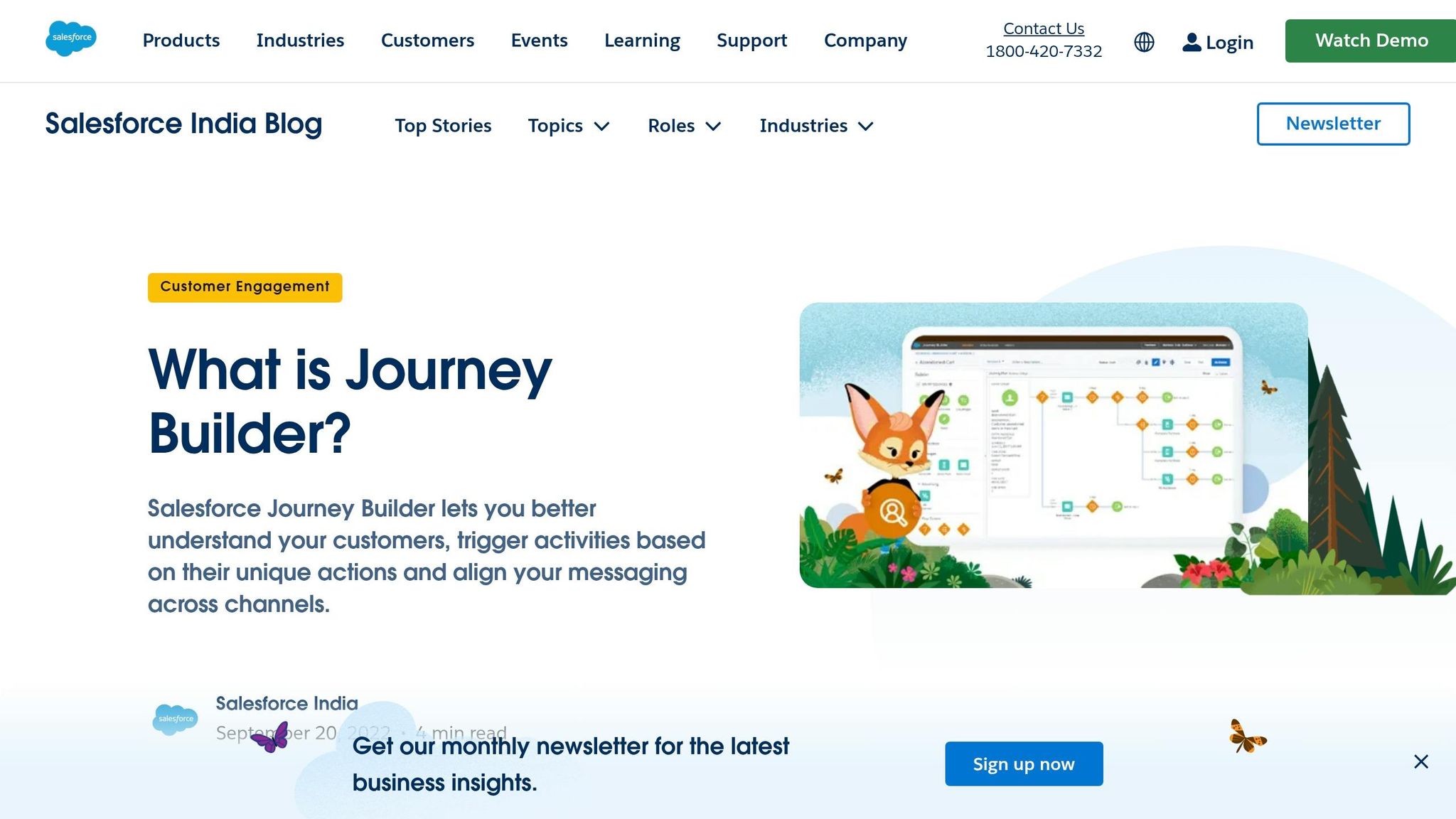
For Salesforce-centered stacks, Journey Builder gives you a CRM-native way to run orchestration. Salesforce Marketing Cloud Journey Builder is the best fit for teams already standardized on Salesforce CRM.
Event ingestion
Journey Builder pulls in customer events through a close native connection to Salesforce CRM.[3] If your customer data already sits in Salesforce, setup and flow tend to be much simpler.[3]
Trigger logic
Journey Builder uses real-time signals from mobile apps, websites, POS systems, and support desks to trigger personalized email, SMS, and push journeys.[1] In practice, that works best when Salesforce is also the system holding the customer record.
Identity resolution
Identity resolution is strongest for Salesforce-first teams because customer activity ties straight to CRM records.[3]
Journeys and actions
Journey Builder moves customers through personalized email, SMS, and push journeys across automated sequences.[1] It also includes journey reporting inside Marketing Cloud. The platform is best suited to large enterprises already operating within the Salesforce ecosystem.[3]
3. Microsoft Dynamics 365 Customer Insights - Journeys
Microsoft Dynamics 365 Customer Insights - Journeys is the better fit for teams that already run on Dynamics 365, Azure, and Dataverse. If Adobe and Salesforce tend to work best inside their own ecosystems, Microsoft follows the same pattern.
Event ingestion
The platform brings CRM, web, and mobile data into one shared model.[2] For Microsoft-first teams, Dataverse cuts a lot of the integration work.[3] It can also take in external data through APIs and webhooks.[6]
That shared model matters most when live data needs to drive action right away.
Trigger logic
It uses near-real-time data streams to trigger next-best actions.[2] That said, more complex trigger logic can need specialized skills.[10]
Identity resolution
Microsoft ties together interactions from web, mobile, and offline channels into a single customer profile.[8] Before launch, check email, phone, and device matching so the profile logic holds up in practice.
Journeys and actions
This setup works best when the CRM already controls the budget and metadata needs to stay inside Microsoft systems.[10] Journey reporting and analytics are built into the platform, and Dataverse connectivity helps it plug into the rest of the Microsoft data stack.
The practical decision is simple: should your orchestration layer live inside Microsoft, or should it sit above a broader customer data stack?
4. Braze
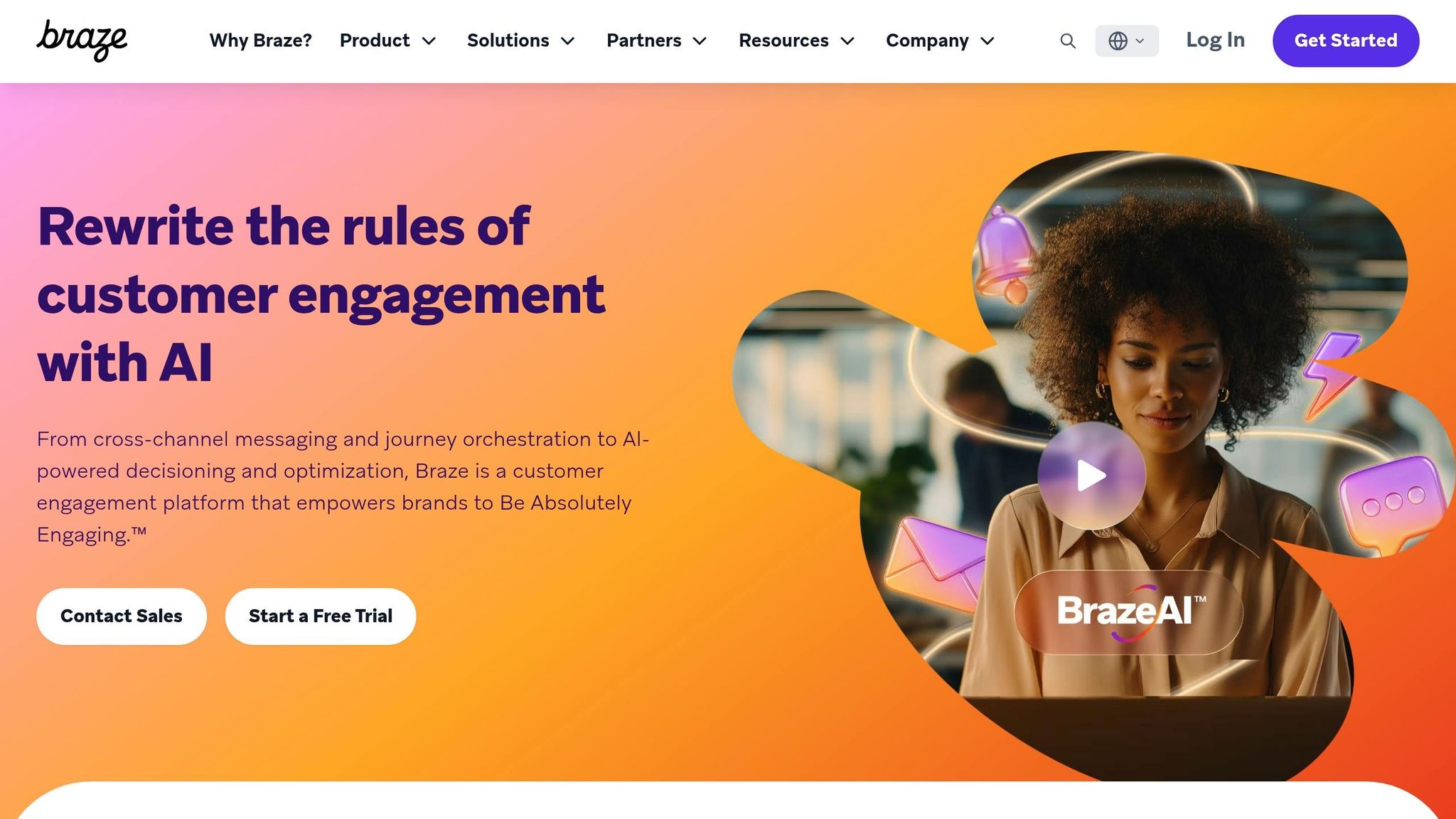
Braze is strongest when your marketing runs off live product behavior. While Adobe, Salesforce, and Microsoft tie orchestration closely to their own data stacks, Braze is built around event-led, cross-channel engagement. That makes it a strong fit for mobile-first B2C brands.[4][6]
Event ingestion
Braze takes in data through APIs, SDKs, and server-side event streams. It can respond fast to high-intent signals like cart abandonment, which is often the difference between a timely message and a missed shot. For mid-market teams, it also supports warehouse audience sync and data export APIs.[4][6]
That event-first setup flows straight into Canvas Flow, which is Braze's orchestration layer.
Trigger logic
Canvas Flow handles multi-step branching, delays, experiments, A/B and multivariate testing, and holdout groups. It also includes frequency capping, which helps teams avoid hammering users with too many messages. BrazeAI adds send-time and channel optimization.[4][6]
"Canvas makes complex, multi branch tests practical without constant engineering help, and real time triggers align closely to product events." - StartupStash [4]
Identity resolution
Braze brings profiles together across devices and channels, but its deduplication is lighter than what you'd get from a CDP. If your team has messy identity needs across non-marketing data sources, you'll likely want a separate CDP in the stack.[6]
Journeys and actions
Braze supports email, SMS/RCS, WhatsApp, push, in-app, web messaging, Content Cards, and digital ads. Reporting covers journey, message, and experiment performance, alongside top social media analytics tools for broader campaign tracking. Pricing is quote-based, and total cost can come in higher than some other options.[4][5]
5. Iterable
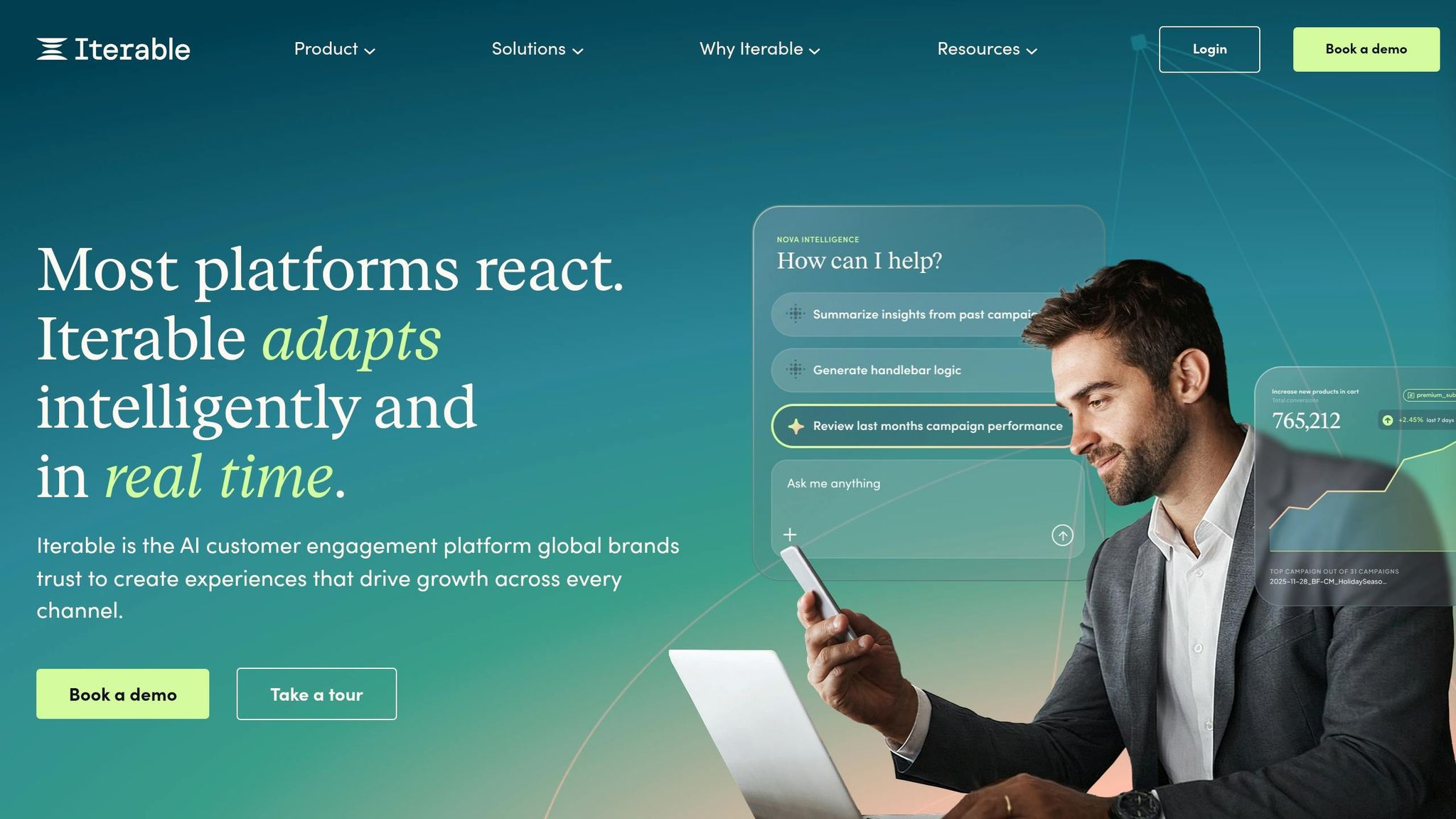
If Braze starts with events, Iterable starts with your data setup. Iterable is a composable orchestration tool for teams with strong warehouse or CDP data.[5]
Event ingestion
Iterable connects natively to Snowflake and Segment, and it also uses APIs to bring in behavioral signals and custom events via FoxMetrics.[3][5] That setup tends to work best when your event data is already clean and well structured.
When that foundation is in place, conditional journeys are much more dependable.
Trigger logic
Its visual journey builder supports multi-step conditional flows and behavioral triggers. So when a user does something in your app or on your website, Iterable can react right away.[1][4] Journey Assist helps teams build journeys faster. Predictive Goals adds data-driven recommendations on top.[5]
Identity resolution
Iterable leans on stable IDs and clean event data more than deep matching across many sources. In plain terms, it fits best when identity is already well managed.[3][5]
Journeys and actions
Iterable runs omnichannel messaging through one unified workflow.[3] Pricing is custom and not listed publicly, so you’ll need to contact the vendor for a quote based on contact volume, message sends, and feature needs.[5] For mid-market teams, the main watchout is ops capacity - someone needs to set up the platform well and keep governance tight.[3]
6. Insider
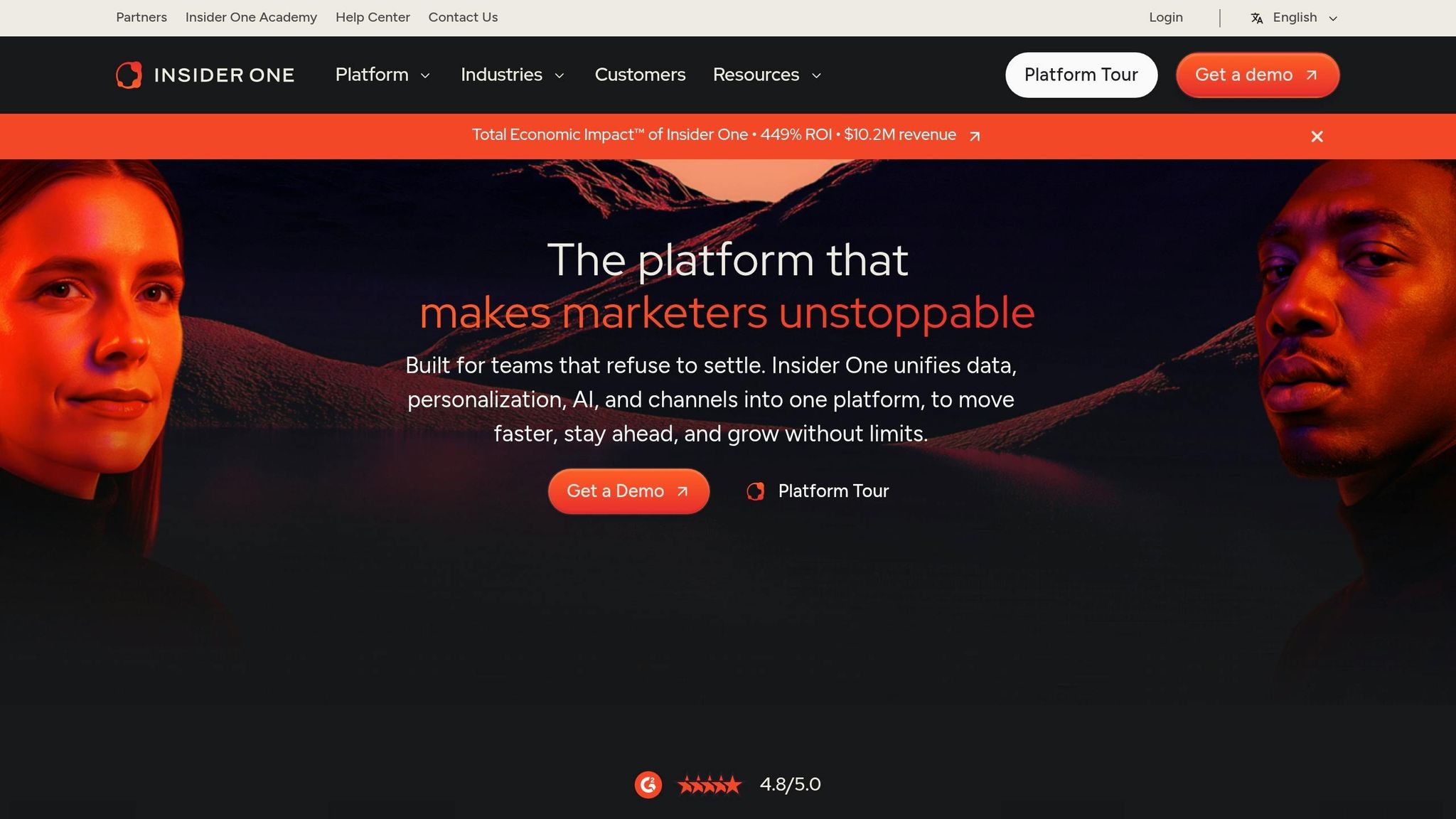
Insider is built for teams that need live decisioning at scale. It pulls in live data, predicts likely behavior, and triggers the next action across busy customer journeys. That makes it a better fit for enterprise teams with high-volume activity than for lean mid-market ops.
Event ingestion
Insider ingests real-time behavioral events across mobile apps, websites, POS systems, and support systems.[1] It is built to handle high data volumes.[6] The platform also connects to warehouse and CDP data, which helps teams sync audiences and trigger event-based activation without relying on one source alone.
Trigger logic
Insider reacts to live signals with predictive branching rather than fixed rules.[1] That matters when a team is running email, SMS, and WhatsApp in the same campaign. Instead of treating each channel like its own lane, Insider sequences them to help reduce over-messaging and customer fatigue.[6] Of course, that falls apart if identity stitching is weak, so profile quality matters here.
Identity resolution
Insider stitches web, mobile, and offline activity into one customer profile.[1][8] That unified profile sits underneath the journey canvas and gives the platform the context it needs to react to customer behavior across channels.
Journeys and actions
The visual journey canvas supports predictive orchestration instead of static branching.[1] Reporting focuses on journey performance and incremental lift, but the platform is generally a better match for enterprise teams than smaller operators with thin resources. If you're evaluating it for a high-volume setup, test identity merging and lift reporting early.[6] Pricing is custom and not listed publicly, so you'll need to contact Insider for a quote.[6]
7. MoEngage
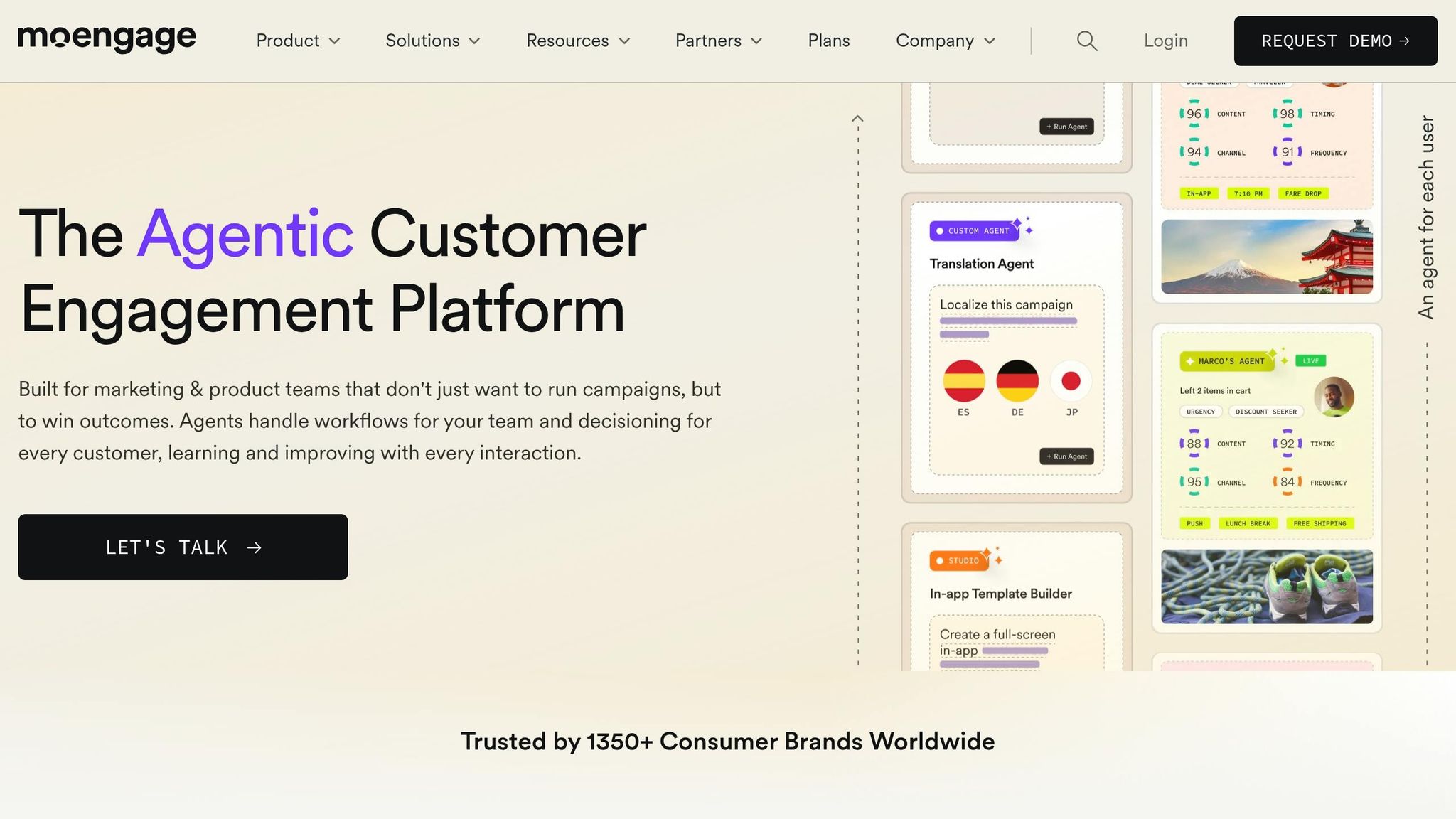
MoEngage is built for teams that want mobile-first, real-time engagement without the heavier setup that often comes with enterprise orchestration. It leans more toward the mid-market, especially for companies that need to react to user behavior fast and get campaigns live without a long integration project.
Event ingestion
MoEngage ingests real-time events from mobile apps, websites, POS systems, and support desks, then normalizes CRM, analytics, and offline data through a unified model.[1][2] For mid-market teams, Snowflake and BigQuery support direct syncs without duplicate pipelines.[9]
Trigger logic
MoEngage turns live behavioral signals into next-best actions through a visual journey canvas with real-time triggers and predictive send-time and channel optimization.[1]
Identity resolution
MoEngage stitches web, mobile, and offline activity into a unified customer profile.[8]
Journeys and actions
The visual journey canvas supports email, SMS, push notifications, and in-app messaging.[1][9] Reporting tracks engagement and churn signals.[1] Prebuilt connectors to CRM, analytics, and service tools cut integration work for mid-market teams.[2] In practice, that makes MoEngage a strong fit when real-time behavior, simple activation, and lower integration overhead matter most.
8. CleverTap
CleverTap sits near the analytics-heavy side of the orchestration market. It combines analytics and activation in one mobile-first platform.[1][8] It fits best with digital businesses and mobile apps that have large, active user bases.[3]
Event ingestion
CleverTap pulls in behavioral signals from mobile apps, websites, POS systems, and support desks.[1] That gives teams one shared signal layer to use for orchestration.
Trigger logic
CleverTap uses AI-powered automation to move past fixed sequences. It can trigger the next best action based on live signals.[1] That makes it a strong fit for retention and re-engagement use cases.
Identity resolution
CleverTap stitches together interactions across web, mobile, and offline channels to build a long-term view of each customer. It tracks users across devices over time.[8] For teams trying to understand the full customer path, that cross-channel view is a big plus.
Journeys and actions
Those profiles feed into a visual journey canvas for channel execution. It supports push notifications, in-app messages, email, and SMS.[1] CleverTap's built-in analytics also shows friction points and funnel drop-off inside the same workflow.[8]
On warehouse connectivity, CleverTap leans more on app and web event streams than on native warehouse integrations. If your team runs pipelines in Snowflake or BigQuery, verify connector availability before you commit.
For mid-market teams, the draw is simple: measurement and activation live in the same tool instead of being split across multiple systems.
9. Bloomreach Engagement
Bloomreach Engagement is a commerce-focused orchestration platform built to map, analyze, and automate customer journeys across channels.[7] Its main advantage is simple: it brings commerce data, identity, and activation into one place.
Event ingestion
Bloomreach supports 100+ native integrations, including Shopify, Magento, BigCommerce, Snowflake, and Databricks.[3]
Trigger logic
Loomi handles predictive decisioning and goal-based campaign orchestration.[3]
Identity resolution
Bloomreach includes a built-in CDP with a real-time single customer view. That means pre-login behavior can shape the next message once a customer is identified.[3] The profile layer feeds straight into the journey engine.
Journeys and actions
It runs campaigns across email, SMS, WhatsApp, RCS, web, mobile apps, and paid media. Pricing is quote-based.[7]
10. Twilio Segment Journeys with Engage
Twilio Segment is data-first, not message-first. It pulls in first-party data from 700+ sources and sends it to 750+ destinations, while Engage uses that data to run multichannel journeys [5][9]. The main difference is warehouse connectivity. If your stack centers on the warehouse, Segment fits well. If you want a suite built mainly around campaign building, Segment leans more on data plumbing than on native journey design.
Event ingestion
Segment connects warehouses, sources, and destinations, which lets teams activate data they already have instead of rebuilding pipelines from scratch [5]. That connector breadth is the main draw.
Trigger logic
Segment can listen for real-time behavioral signals across connected touchpoints and trigger actions from live product events with low latency [4]. But there’s a catch: messy event naming or schema drift can weaken routing and trigger logic [4].
Identity resolution
Segment ties together anonymous and known activity across devices, including cases where a user changes their email, using deduplication and identity merging [9]. If identity rules are loose or poorly set up, journeys can fail or send the wrong message [5].
Journeys and actions
Engage supports email and SMS natively, and it connects straight into Twilio’s APIs for WhatsApp and voice [5]. Its job is activation, not full-channel ownership. In practice, that means it syncs audiences and triggers across a large destination catalog, which works well for best-of-breed stacks and many mid-market teams [9].
Reporting depends on how the setup is configured. Teams may view performance at the journey level, the message level, or in the warehouse itself. Pricing is also split: Connections includes Free and Team tiers based on Monthly Tracked Users (MTUs), while the CDP and Engage products are sold through custom quotes [5].
11. MessageBird
Bird, formerly MessageBird, is a CPaaS platform built for event-driven customer messaging, not a full CDP-style orchestration stack. The main trade-off is simple: where warehouse-native tools focus on data, Bird focuses on message execution. Compared with CDP-led platforms, it gives up data depth for easier orchestration.
Event ingestion and identity resolution
Bird does not put much focus on native warehouse connectivity or deep identity resolution in its public materials. If your team has complex identity needs, you'll likely need a separate data layer.
Trigger logic
Flow Builder is Bird's visual orchestration layer. It routes customers through branching, event-triggered messaging flows.[1][7]
Journeys and actions
Bird is a fit for mid-market teams that need fast, visual message routing more than deep identity, warehouse, or analytics layers. Reporting is not a main public focus. It works best when speed and channel delivery matter more than advanced profile unification.
That makes Bird the execution-first option in this group.
12. Oracle Unity
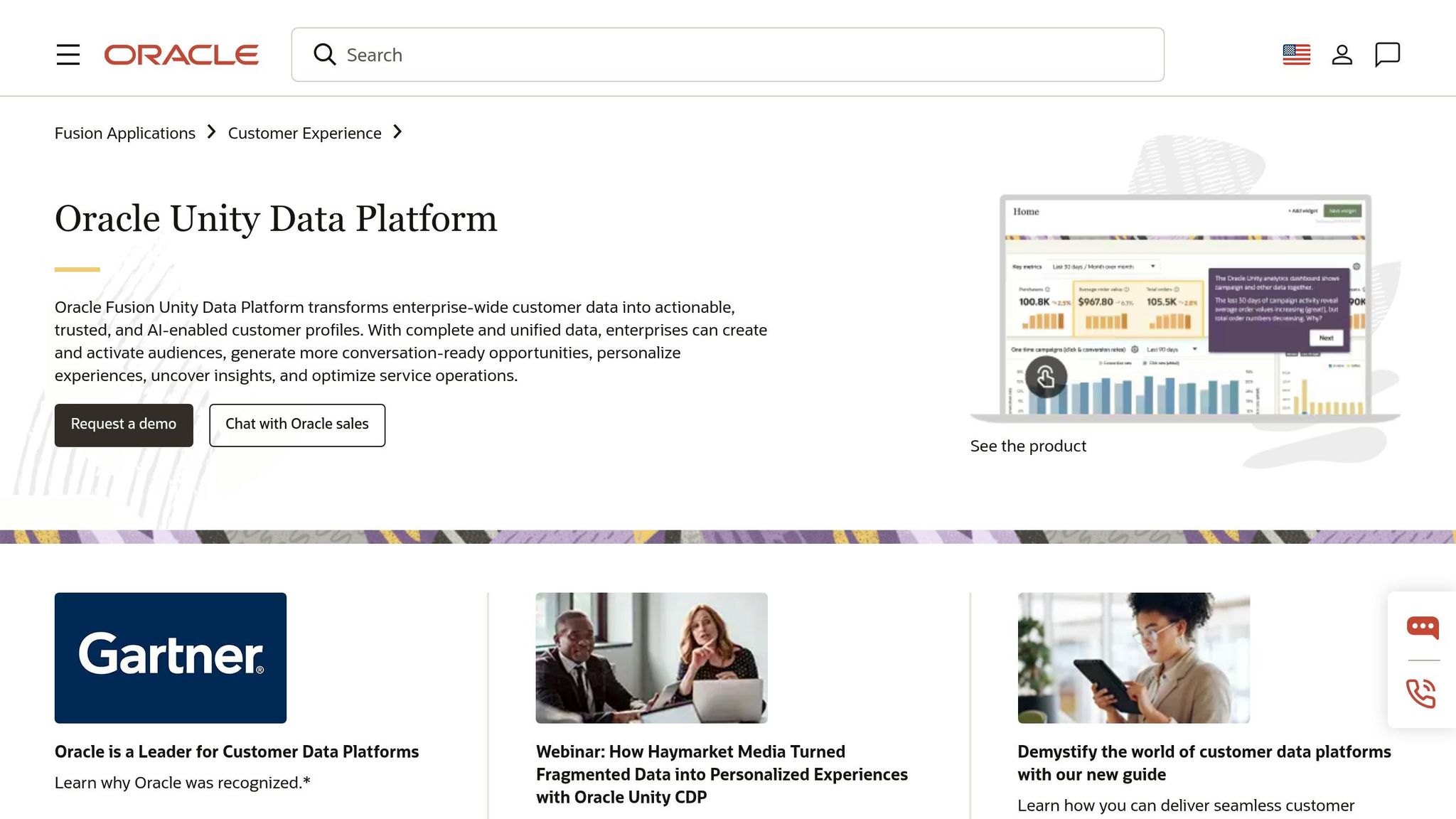
Oracle Unity is strongest when customer data comes first and activation follows from that. It sits on the CDP-heavy end of this list, with profile unification ahead of message execution. Oracle Unity is an enterprise CDP and orchestration platform that brings marketing, sales, service, and back-office data into a single customer profile. That makes it a better fit when orchestration depends on clean identity across the business, not just fast campaign sends.
Event ingestion
Oracle Unity brings together marketing, sales, service, and back-office data into one customer view.
Identity resolution
Oracle Unity uses deterministic and probabilistic matching to connect email addresses, device IDs, and CRM records [10][9].
Trigger logic
Oracle Unity can trigger journeys from real-time behavioral events [10].
Journeys and actions
Oracle Unity supports multichannel journey execution on top of its unified profile layer. Reporting and warehouse connectivity are available, but they are geared more toward enterprise data setups. If you're on a mid-market team with lighter infrastructure, it's worth checking fit before you commit. In practice, it fits large organizations better than mid-market teams. The main question is simple: does the depth of its data unification justify the heavier enterprise fit?
Feature-by-Feature Comparison Tables
The tables below compare 12 platforms across ingestion, triggers, identity, execution, reporting, and warehouse fit. They make the trade-offs easier to scan after the platform overviews. Use them to split ecosystem-native suites from event-first tools.
Event ingestion and warehouse connectivity
Start with data intake. It shapes everything that happens downstream.
| Tool | SDK & API Support | Streaming Events | Warehouse / destination connectivity | Setup effort |
|---|---|---|---|---|
| Adobe Journey Optimizer | Yes | Yes (AEP-native) | Adobe Experience Platform | High |
| Salesforce Marketing Cloud Journey Builder | Yes | CRM sync + API | Salesforce Data Cloud | Medium |
| Microsoft Dynamics 365 Customer Insights - Journeys | Yes | Near-real-time via Dataverse + webhooks | Dataverse; external APIs | Medium |
| Braze | Yes | Real-time server-side | Snowflake / Databricks exports | Medium |
| Iterable | Yes | Real-time event feeds | Snowflake, Segment, flexible API | Medium |
| Insider | Yes | Real-time behavioral events | Warehouse + CDP sync supported | Medium |
| MoEngage | Yes | Real-time mobile + web events | Snowflake, BigQuery direct sync | Low–Medium |
| CleverTap | Yes | Real-time app + web events | App and web event streams; limited native warehouse | Medium |
| Bloomreach Engagement | Yes | 100+ native integrations | Snowflake, Databricks | Low–Medium |
| Twilio Segment Journeys with Engage | Yes | Streaming + batch | 750+ destinations | Low |
| MessageBird | Yes | Event-triggered messaging flows | Limited public detail | Low–Medium |
| Oracle Unity | Yes | Real-time behavioral events | Enterprise data integrations; back-office connectors | High |
A quick read of this table shows a clear split. Adobe, Salesforce, Microsoft, and Oracle lean into their own data layers. Braze, Iterable, MoEngage, and Bloomreach tend to fit more cleanly into mixed stacks. Twilio Segment Journeys with Engage stands out on destination breadth.
Trigger logic and orchestration
This is where CRM-triggered orchestration and event-triggered orchestration start to part ways. The next table shows how each platform turns signals into actions.
| Tool | Trigger Type | Branching Depth | AI / Decisioning | Holdouts & Experiments |
|---|---|---|---|---|
| Adobe Journey Optimizer | Real-time behavioral + AEP segments | Deep | AI-driven next-best-offer | Limited public detail |
| Salesforce Marketing Cloud Journey Builder | CRM lifecycle + API events | Deep | Agentforce AI agents | Limited public detail |
| Microsoft Dynamics 365 Customer Insights - Journeys | Near-real-time data streams + CRM triggers | Moderate–Deep | AI-assisted next-best-action | Limited public detail |
| Braze | Real-time event streams | Deep | BrazeAI send-time + channel optimization | A/B, multivariate, holdout groups |
| Iterable | Real-time behavioral events | Deep | Predictive Goals; Journey Assist | A/B testing supported |
| Insider | Behavioral + predictive | Deep | AI-driven next-best-action | Limited public detail |
| MoEngage | Behavioral + analytics-led | Moderate–Deep | AI-powered segmentation + send-time optimization | Limited public detail |
| CleverTap | Real-time event-based | Moderate–Deep | Predictive segments; AI automation | Limited public detail |
| Bloomreach Engagement | Real-time + predictive (Loomi) | Deep | AI-driven orchestration | Limited public detail |
| Twilio Segment Journeys with Engage | Audience qualification + events | Moderate | Rules-based (Engage layer) | Limited public detail |
| MessageBird | Event-triggered branching flows | Moderate | Limited public detail | Limited public detail |
| Oracle Unity | Real-time behavioral events + CRM triggers | Moderate–Deep | AI-assisted decisioning | Limited public detail |
If your team runs on product signals, Braze, Iterable, Insider, and Bloomreach Engagement look stronger here. If your motion is still tied to CRM stages and account data, Salesforce Marketing Cloud Journey Builder and Microsoft Dynamics 365 Customer Insights - Journeys will feel more familiar.
Identity resolution and profile model
Next, check how each platform handles the jump from anonymous user to known customer.
| Tool | Anonymous-to-Known Handling | Native Profile Stitching | CRM / CDP Dependence | Supported Identifiers |
|---|---|---|---|---|
| Adobe Journey Optimizer | Yes | Yes | Adobe Experience Platform | Email, device, CRM |
| Salesforce Marketing Cloud Journey Builder | Limited (CRM-anchored) | Partial | Salesforce CRM required | Email, CRM ID |
| Microsoft Dynamics 365 Customer Insights - Journeys | Yes | Yes (unified profile via Dataverse) | Dynamics 365 / Dataverse | Email, phone, device, CRM |
| Braze | Yes | Yes | Independent / API-led | Email, device |
| Iterable | Yes | Yes | Independent | Email, device |
| Insider | Yes | Yes (ML stitching) | Independent | Email, device, web, mobile |
| MoEngage | Yes | Yes (unified customer profile) | Independent / mobile-first | Email, device, CRM |
| CleverTap | Yes | Yes | Mobile-first / Independent | Device, email, custom ID |
| Bloomreach Engagement | Yes | Yes (native CDP layer) | None required | Email, cookie, custom |
| Twilio Segment Journeys with Engage | Yes | Yes (deduplication + identity merging) | CDP-led | Email, device, anonymous ID |
| MessageBird | Limited public detail | Limited public detail | Execution-layer only | Email, phone |
| Oracle Unity | Yes | Yes (deterministic + probabilistic matching) | Enterprise CDP-led | Email, device ID, CRM record |
This is one of those areas where the fine print matters. A platform may say it supports identity, but the question is how much work you need to do outside the tool. Salesforce Marketing Cloud Journey Builder is more CRM-anchored. Bloomreach Engagement, Braze, and Iterable are less tied to a parent system.
Journey execution, actions, and reporting
Last, compare channel coverage, action speed, and reporting depth.
| Tool | Core Channels | Action Latency | Step-level analytics | Attribution Signals | Mid-Market Usability |
|---|---|---|---|---|---|
| Adobe Journey Optimizer | Email, push, SMS, web, in-app | Near real-time | Yes | Deep (Adobe Analytics) | Low (requires expertise) |
| Salesforce Marketing Cloud Journey Builder | Email, ads, SMS, sales/service | Depends on CRM sync | Yes | Pipeline & ROI | Low–Medium |
| Microsoft Dynamics 365 Customer Insights - Journeys | Email, SMS, push, web | Near real-time | Yes | CRM-native pipeline reporting | Low–Medium |
| Braze | Email, push, SMS, in-app, web | Near real-time | Yes | Engagement & experiment lift | Medium–High |
| Iterable | Email, mobile, web, SMS | Real-time | Yes | Funnel movement & attribution | Medium–High |
| Insider | Email, SMS, WhatsApp, push, web | Real-time | Yes | Incremental lift reporting | Medium |
| MoEngage | Email, SMS, push, in-app | Real-time | Yes | Analytics-led engagement | High |
| CleverTap | Push, in-app, email, SMS | Real-time | Yes | Behavioral retention | High |
| Bloomreach Engagement | Email, SMS, web, search | Real-time | Yes | Revenue & conversion lift | Medium–High |
| Twilio Segment Journeys with Engage | Multi-channel via destinations | Moderate | Limited (Engage layer) | Downstream destinations | Medium |
| MessageBird | SMS, email, WhatsApp, voice | Near real-time | Limited public detail | Limited public detail | Medium |
| Oracle Unity | Multichannel via unified profile layer | Near real-time | Yes | Enterprise attribution; back-office signals | Low (enterprise fit) |
A pattern shows up fast. MoEngage and CleverTap look easier for mid-market teams that want fast deployment and direct channel execution. Adobe Journey Optimizer and Oracle Unity offer more depth, but they ask for more skill and heavier setup. Twilio Segment Journeys with Engage sits in a different lane - less of a full reporting layer, more of an orchestration point tied to downstream tools.
Pros and Cons by Platform
The tables above covered features. This section shows fit - where each platform makes sense, and where it tends to run into trouble.
| Tool | Best for | Key advantages | Main limitations | Mid-market fit |
|---|---|---|---|---|
| Adobe Journey Optimizer | Large B2C teams with AEP already in place | Best when AEP already holds the customer event layer | High setup complexity; requires strong data skills | High operational overhead |
| Salesforce Marketing Cloud Journey Builder | Salesforce-native enterprises | Best for teams already running Salesforce workflows | Requires specialist admin skills; fragmented modules; fragile data pipelines | High first-year enterprise cost |
| Microsoft Dynamics 365 Customer Insights - Journeys | Teams already standardized on Dynamics 365 | Works best when Dataverse is already the system of record | Less agile outside the Microsoft ecosystem | Best value when Dynamics 365 is already in place |
| Braze | Mobile-first growth teams | Marketer-friendly visual Canvas; strong experiment tooling | Steep learning curve for advanced branching; pricing can become sensitive at scale | Strong mid-market fit, but still benefits from some technical support |
| Iterable | Product-led B2C teams | Fits teams that want flexibility without a parent ecosystem | Advanced journey logic still requires some technical setup | Strong mid-market fit for teams that want flexibility without full enterprise overhead |
| Insider | Cross-channel CX teams | Best for teams needing one canvas across multiple channels | Onboarding depth can be significant | Good option for teams that need multiple channels in one canvas |
| MoEngage | Mobile-first consumer brands | Fast to deploy and easier to operate than enterprise suites | UI gets crowded as features stack up | High mid-market usability and competitive pricing versus enterprise incumbents |
| CleverTap | App-first retention teams | Strong fit for app-heavy retention teams | Advanced personalization requires clean, well-structured data | Strong fit for teams with a mobile-heavy user base |
| Bloomreach Engagement | Retail and digital commerce teams | Native CDP layer; broad integrations; AI-driven orchestration | Custom quotes only; can be complex to implement | High-end features may exceed the needs of smaller mid-market teams |
| Twilio Segment Journeys with Engage | Developer-led, warehouse-centric teams | Best when engineering owns the data layer | Costs rise sharply with MTU growth | Best when engineering owns the data layer |
| MessageBird | Teams prioritizing fast, visual message routing | Execution-first; low setup friction | Limited native identity resolution and warehouse connectivity | Medium; works best when channel delivery matters more than profile depth |
| Oracle Unity | Large enterprises with back-office data | Deep profile unification across marketing, sales, service, and back-office data | Setup can be complex; less friendly for non-technical marketers | Weak mid-market fit; requires substantial IT and data resources |
The pattern is pretty clear. Ecosystem-native platforms cut down integration work if your stack is already built around that vendor. Composable tools give marketing more room to shape workflows, data use, and channel logic - but they often ask more from your team.
That trade-off matters most when you look at your current stack, team size, and data maturity. The next section uses those fit signals to help narrow the shortlist.
How to Choose the Right Orchestration Tool
Start with one question: where does your customer data live today?
If your team already works inside Salesforce or Adobe Experience Cloud, a suite-led path often makes more sense. The main reason is simple: your customer data and activation layer stay close to the systems you already run, which cuts down integration drag.
If your data sits across app event streams and a cloud warehouse like Snowflake or BigQuery, a composable or warehouse-led model is usually the better call. It keeps governance tighter and helps you avoid extra data copies.
Use the comparison tables above to cut the shortlist first by activation model, then by channels, latency, identity, and operating lift.
| Activation model | Best fit from this guide | Data home | Implementation lift |
|---|---|---|---|
| CRM-led | Salesforce or Adobe ecosystem tools | CRM / suite cloud | High; requires admin and ops expertise |
| CDP-led | Twilio Segment, Braze, Iterable | Vendor cloud | Medium; varies by platform |
| Warehouse-led | Warehouse-native/composable activation | Snowflake, BigQuery, Redshift | Medium-high; needs data engineering |
After data home, look at channel mix. That’s usually the next cut.
If push notifications and in-app messaging drive your program, Braze, CleverTap, and MoEngage are strong options. If ecommerce data and purchase behavior sit at the center of your use case, Bloomreach is a better fit. The key is to check for the channels you’ll use day to day - email, SMS, push, in-app, web personalization, paid media, or call center handoffs.
Then check speed. Verify whether the platform triggers events in seconds or minutes.
Also confirm identity handling. Require anonymous-to-known stitching and profile merging.
Last, match the tool to your team’s technical capacity. Deep suites and enterprise-grade platforms can do a lot, but they usually need stronger data and marketing ops support to run well. For mid-market teams without dedicated data engineering support, event-first platforms like Braze or Iterable are often easier to run.
With the shortlist narrowed, the conclusion below sums up the main trade-offs.
Conclusion
The 12 tools break into 4 platform types: suite-native platforms, cross-channel engagement platforms, warehouse-first orchestration, and mobile-first lifecycle tools.
The main decision is simple: start with where your customer data lives. For U.S. mid-market teams, stack fit usually comes down to data home and operating model. If your team already runs on a central warehouse, Twilio Segment fits a warehouse-first stack. If you need a unified marketing data layer without a heavy engineering lift, a CDP-led platform like Bloomreach or Insider is a better fit. If you don’t have a dedicated data engineering team, lean toward visual, no-code journey builders so the team can run programs without adding too much operating load.
Shortlist in this order: data location first, then channels, then team capacity.
FAQs
How do I shortlist these tools fast?
Start with an interactive tool-finder checklist or an AI-powered guide that maps vendors to your requirements. It cuts down the list fast and keeps the process tied to how your team actually works.
Then compare 2-3 options with 3 criteria that matter most:
- Where your highest-value moments happen: Pick based on whether your biggest gains come from marketing or service. If most of the upside sits in campaign timing, audience action, or conversion flow, lean toward marketing-first tools. If the money is in support, retention, or issue resolution, look harder at service-focused options.
- Trigger latency for your real-time needs: This is simple - how fast does the system react after a customer does something? If you need near-instant follow-up, slow triggers will cause problems fast. A tool that updates every few hours may be fine for batch outreach, but it won't fit use cases that depend on immediate action.
- Support for A/B testing or holdouts to prove lift: If you can't test impact, you're guessing. Look for tools that let you run A/B testing or holdout groups so you can measure lift instead of relying on vendor claims or surface-level engagement numbers.
Which tool type fits a warehouse-first stack?
Look for warehouse-native platforms or composable CDPs. Tools like Hightouch and Census connect straight to your existing warehouse, such as Snowflake or BigQuery, instead of copying data into yet another system.
The upside is simple: your warehouse stays the single source of truth for identity resolution and audience building. From there, you can sync processed data to downstream marketing and SaaS tools for campaign orchestration.
What matters more: identity or channels?
Identity matters more because it sits at the base of orchestration. Channels are how you reach people. Identity resolution is what makes personalization, suppression, and attribution work in the first place.
Without one customer record across devices and channels, personalization falls apart, cross-channel continuity disappears, and performance metrics get skewed.